
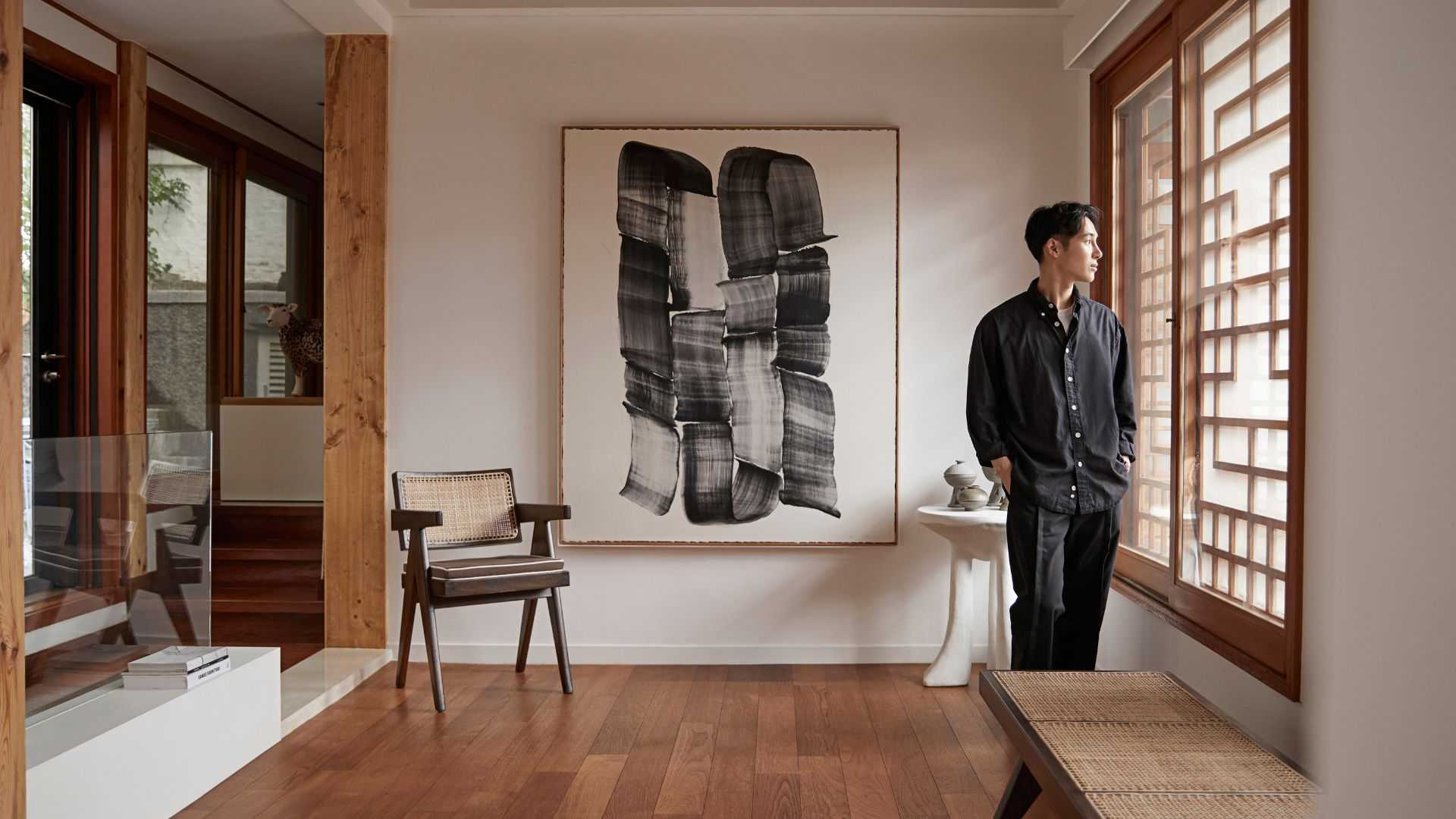
Teo Yang: The discipline of restraint
April 26, 2021
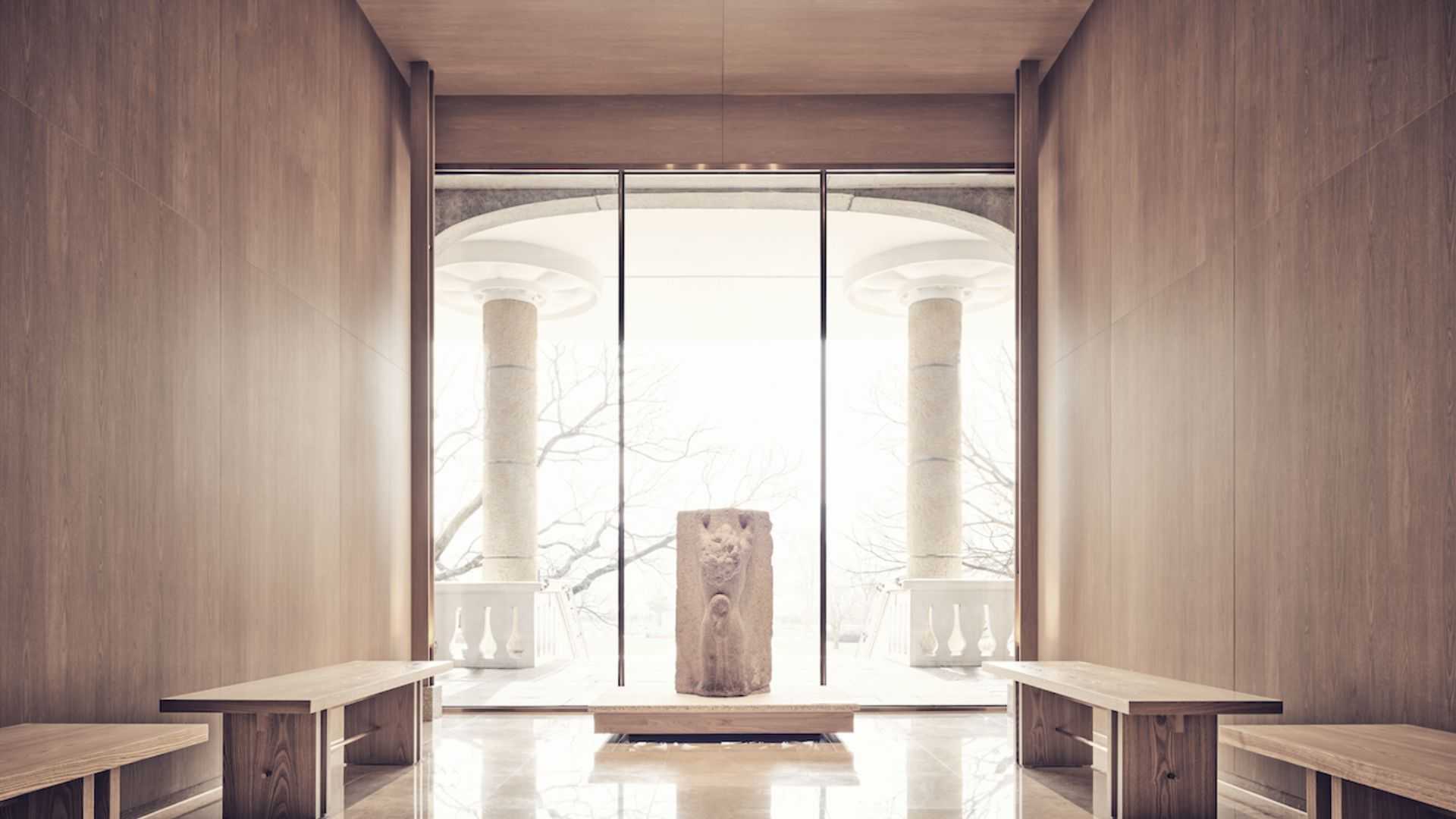
Gyeongju National Museum
There are designers who chase visibility, and then there are designers who chase understanding. Teo Yang belongs firmly to the latter. Speaking with him, it becomes clear that his work is not driven by style, nor even by identity, but by a quieter, more demanding pursuit: deeper knowledge, sharper insight, and a more refined way of delivering ideas through space.
“I try to be true to the essentials,” he says simply. It is a line that could easily read as modesty, but in Teo Yang’s case, it is a working principle. In an industry shaped by speed and spectacle, his ethic is one of resistance. Trends move fast. He does not.
Modern, traditional, or something in between
The label Modern Traditionalist has followed Teo Yang for years. He does not reject it, but he does not claim it either. “I am trying very hard to be one,” he admits, with characteristic understatement. That effort is visible in his work, which never treats tradition as an artefact, nor modernity as an end goal. Instead, the two exist in tension, recalibrated from project to project.
Balance, he explains, is never fixed. Some spaces require a stronger contemporary voice. Others demand that heritage speak more clearly. What matters is not choosing sides, but knowing when to let one lead.
This sensitivity has allowed Teo Yang to shift perceptions around Korean aesthetics. Rather than “rediscovering” modernity within tradition, he sees his role as proving something quieter yet more radical: that the simplicity and clarity often associated with modern design have always existed within Korean culture. His work does not invent that language. It translates it.
And he is clear that this translation has only just begun. “I feel as if I have slightly begun to understand Korean traditional aesthetics,” he says. “There is so much content still to be discovered.” It is not a declaration of mastery, but an acknowledgment of how much remains unresolved.
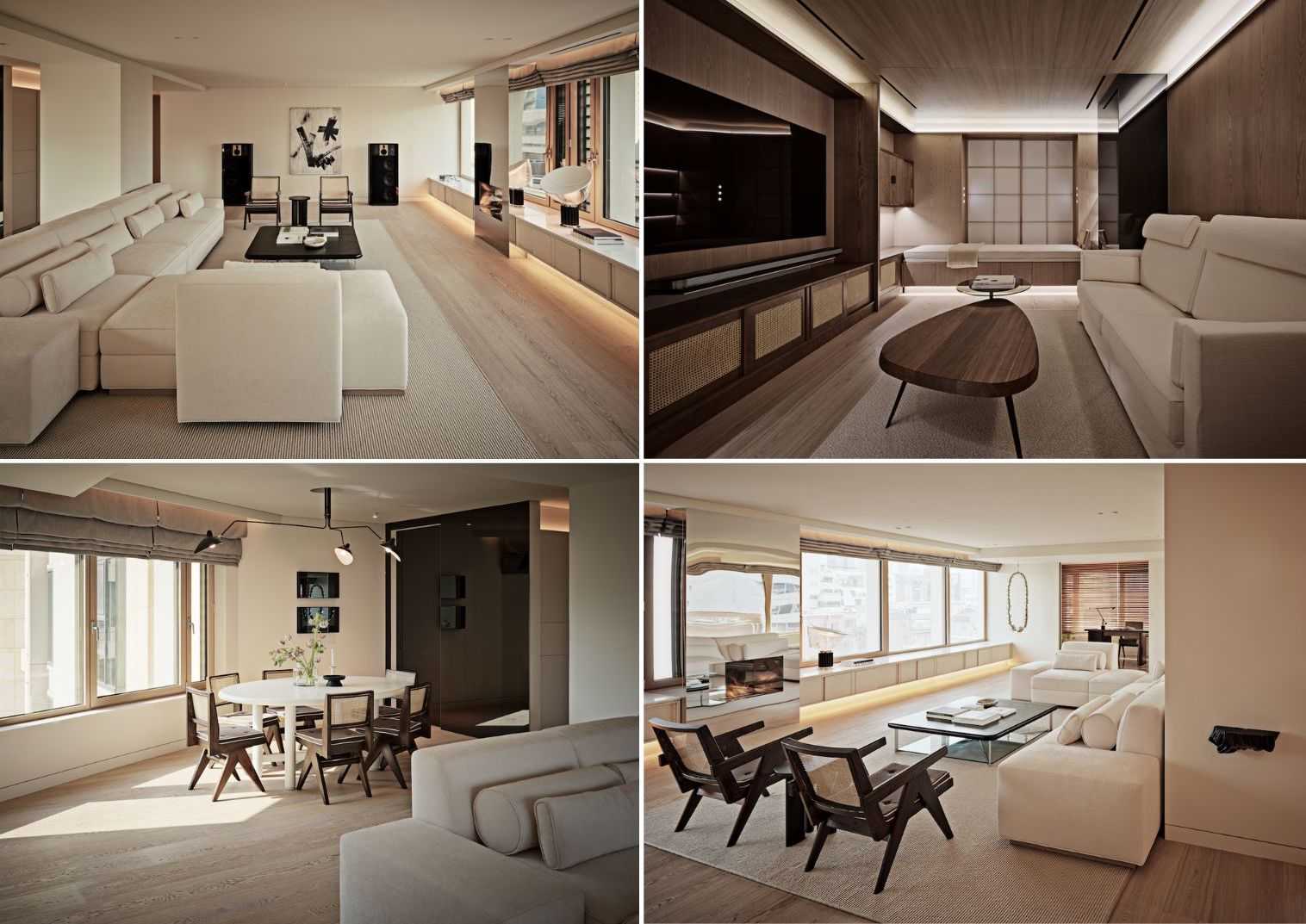
Samseongdong Residence by Teo Yang Studio
Korea, seen differently
As Korean culture has surged globally through music, cinema, fashion and beauty, Teo Yang sees his work as part of a parallel conversation. Not louder, but slower. “I am very happy to suggest another side of Korea to the world,” he says. One that does not rely on immediacy, but on endurance.
When asked whether he brought Korea to the world or the world to Korea, his answer sidesteps the binary. His ambition is not to export an aesthetic wholesale, but to place Korean sensibility into an international visual language, offering it as one option among many. Design, for him, is about expanding choice rather than asserting dominance.
That outlook is evident in his public work. The Manghyang Rest Stop, often cited as a turning point in Korean public-space design, applied the same level of rigour usually reserved for private or cultural projects. The result was not just a building, but a shift in expectation. He has since watched government-led projects evolve, shaped in part by that example. Influence, in this context, came quietly and stuck.
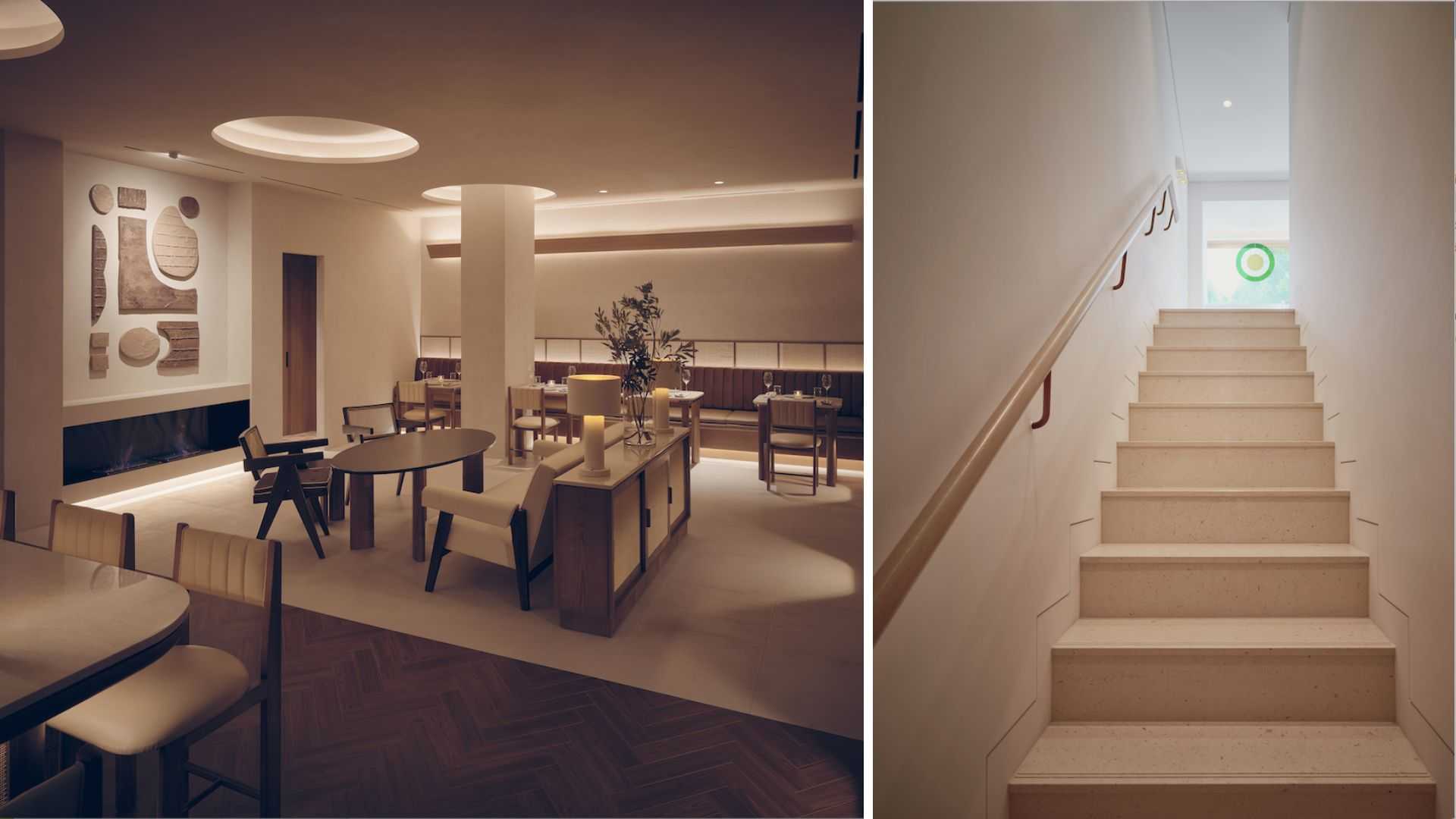
Honnêtes Gens,contemporary French restaurant; stairway to the Kukje Gallery Restaurant
Home, art, and emotional platforms
Teo Yang’s own family home has become a case study in his thinking. It demonstrates that tradition does not belong to the past alone. It can still speak to contemporary life, attract new audiences, and invite reinterpretation. For many, it unlocked a possibility: that heritage can be lived with, not merely preserved.
That same philosophy extends to his museum and gallery work. With collections in constant flux, his approach is not to design for objects, but for emotion. The space must act as a platform, connecting artwork and viewer, flexible enough to adapt yet strong enough to hold meaning. The design succeeds, he says, only if it continues to do its job over time.
His own relationship with art is deeply personal. As a collector, he looks to artists for commentary on society, for ideas that provoke contemporary dialogue. That exchange feeds directly into his architectural thinking. Art does not decorate his work. It informs it.
Among his most meaningful projects, he cites Gyeongju National Museum and Kukje Gallery. Both, for the same reason: they introduce art to people, and in doing so, alter how people think. Design, in his view, earns its value when it changes perception.
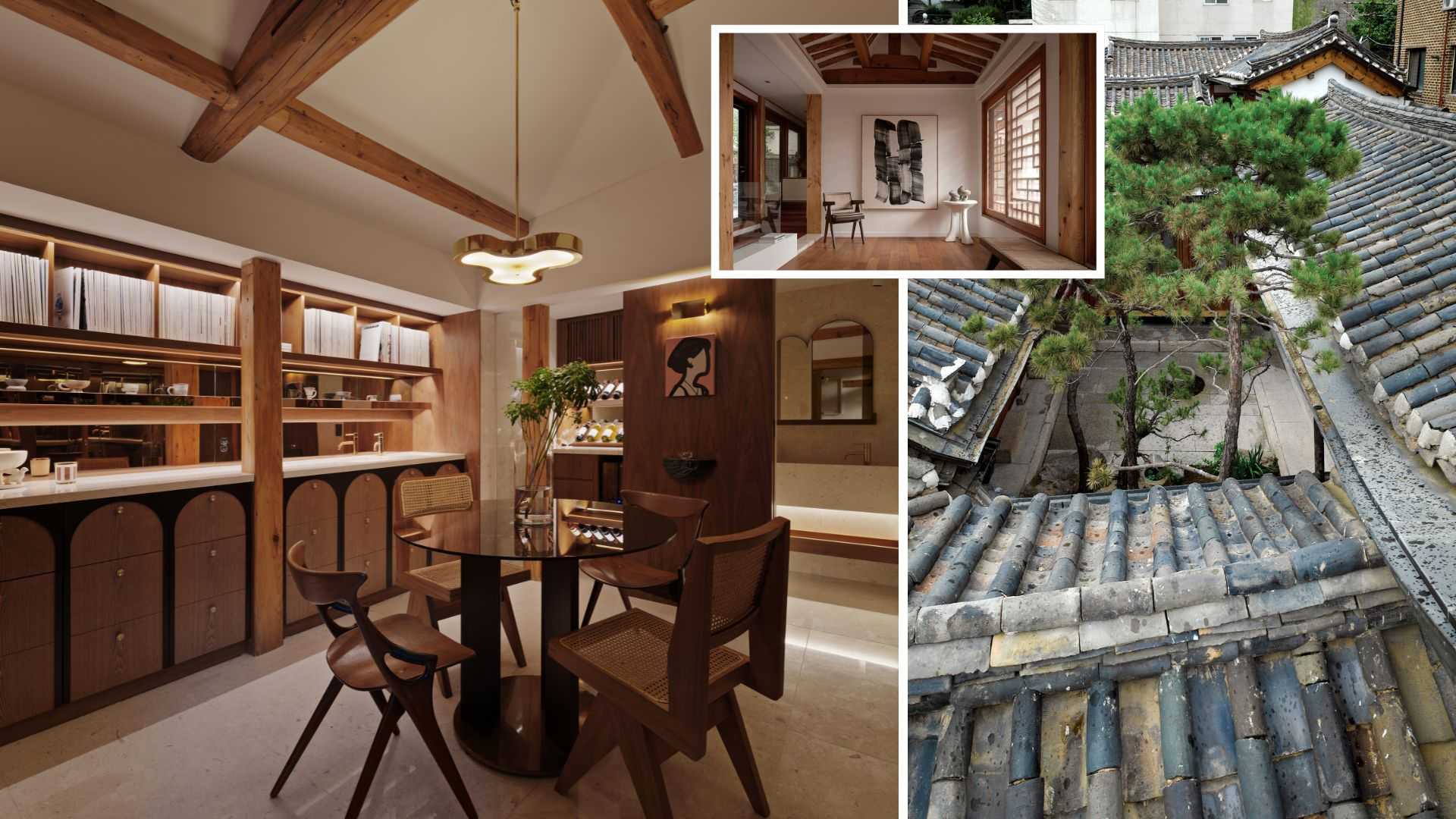
Gyedong Hanok Residence (Teo Yang’s Residence & Studio)
Beyond borders, beyond disciplines
Internationally, the Korean Cultural Center in Beijing stands out as a defining moment. Working within a city so deeply rooted in its own history forced a careful negotiation of context. Creating a space that speaks of Korean culture within that environment was both challenging and energising. It reinforced his belief that cultural identity is strongest when it engages with, rather than withdraws from, its surroundings.
That same curiosity has led him beyond architecture. Earth Library, his skincare brand, grew from a desire to reinterpret traditional Korean medicine through a contemporary lens. Skincare became the medium, not the message. The brand has received international recognition, and he speaks of it with the same restraint he applies to his buildings. Success, to him, is measured in clarity of intent, not scale.
Collaborations, too, are treated with care. His work with de Gournay brought Korean imagery into dialogue with a house long associated with chinoiserie. The challenge lay not in merging styles, but in ensuring that Korean heritage was presented with integrity, not novelty.
Even in furniture, such as the Moon 01 Bed, the pattern holds. Local content, translated into a form that can live comfortably on an international stage. Proof, he suggests, that Korean design can be many things at once.
An unfinished project
The past years of isolation have only reinforced his belief in more personal, inward-looking spaces. Homes, he notes, are evolving. Private gyms, libraries, rooms dedicated to individual pursuits. Hygiene, too, has become architectural again, with transitional spaces regaining importance. None of this reads as trend forecasting. It is simply observation.
When asked to rate his success in preserving and reviving Korean tradition, Teo Yang gives himself five out of ten. It is not false humility. It is a recognition that heritage is not something to be completed.
“There are so many things to be learned, discovered and shared,” he says. It is a long-term goal, one that resists neat conclusions.
In an age obsessed with certainty, Teo Yang’s work feels quietly radical for another reason. It remains open-ended. It does not claim to have arrived. And perhaps that is precisely why it endures.